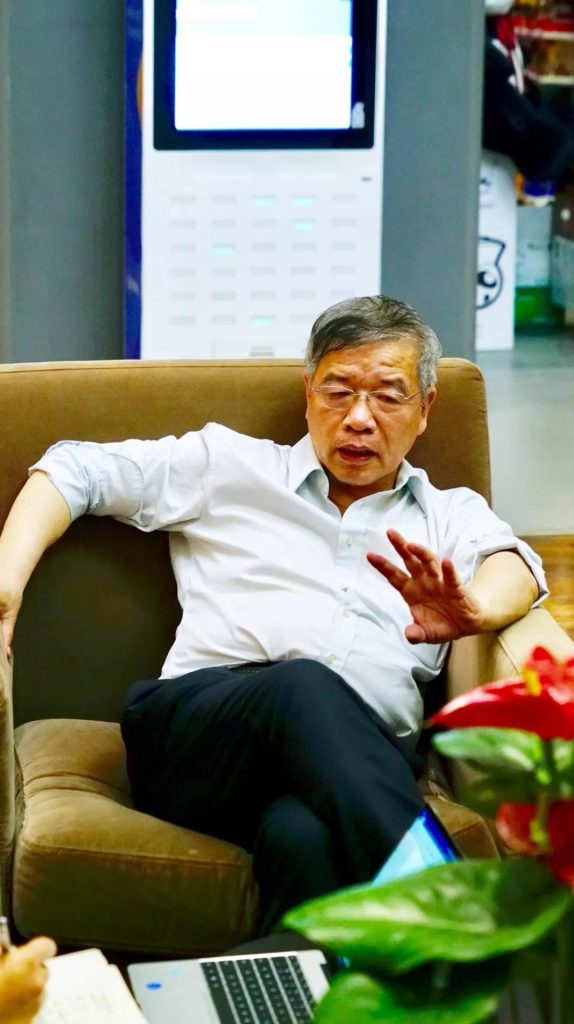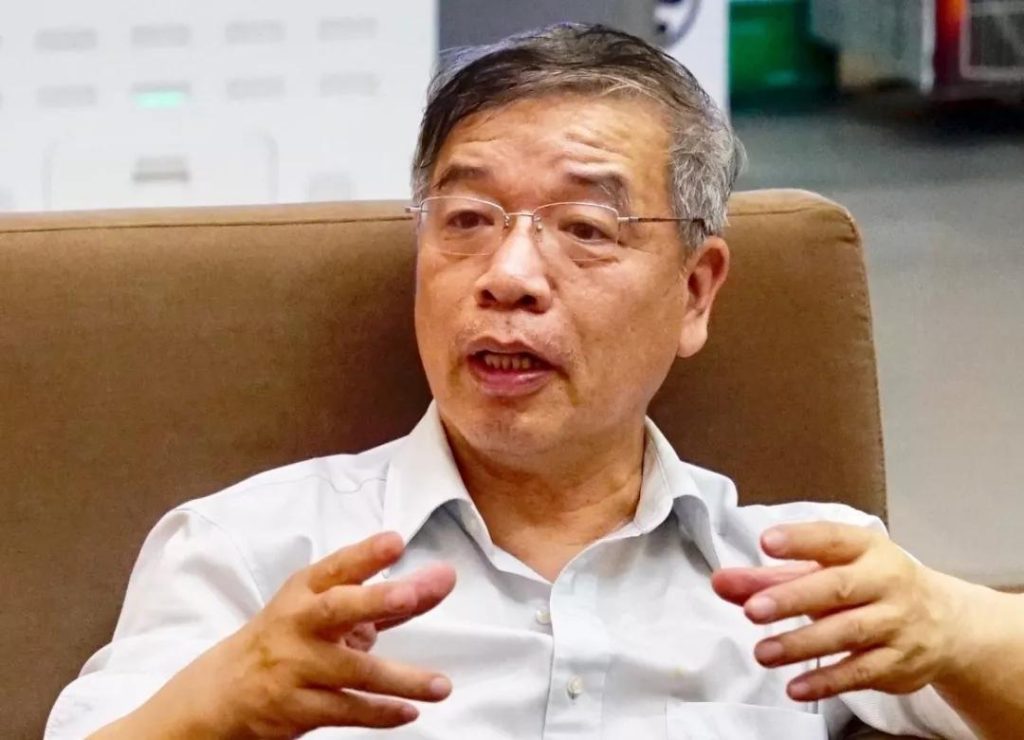
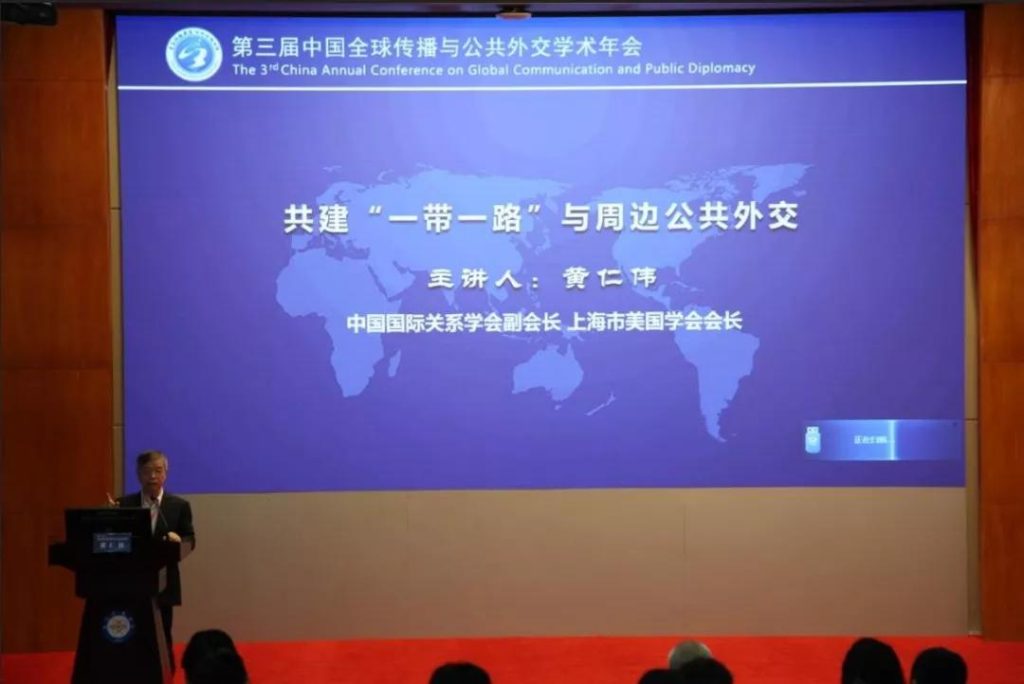
Introduction of the experts:Huang Renwei is a professor and doctoral supervisor at Fudan University, executive vice president of the Belt and Road Institute of Global Governance at Fudan University, vice president of the China Society of International Relations, chairman and director of the Think Tank Research Center of the Shanghai Academy of Social Sciences, president of the Shanghai American Studies Association, and chairman of the Academic Committee of the Shanghai Academy of Social Sciences High-end Think Tank. His main research areas are international relations, including China’s international strategy, Sino-US relations (including the Taiwan issue), international relations theory and international economic relations. He is one of the first scholars in China to initiate the “China Peaceful Rise” research.
Q: What are the characteristics and differences between Fudan University’s Belt and Road Institute and Global Governance Institute and other institutes?
A: The characteristics of Fudan University’s Belt and Road and Global Governance Institute are mainly reflected in the following three aspects .
Comprehensiveness of subject coverage. Fudan University’s Belt and Road Global Governance Institute has ten research institutes, with one institute in each secondary college. For example, the School of International Relations has established a Global Governance Institute and an International Strategy Institute, the School of Management has established a Belt and Road Trade and Investment Institute, the School of Management has established a Belt and Road Industry and Logistics Institute, and the School of Law has established a Belt and Road International Law Institute.
Focus on the specific issues of the Belt and Road Initiative. We encourage each research institute to form a corresponding special research report on the specialized issues in its own field. At present, many studies on the joint construction of the Belt and Road Initiative are very macro, and there is a lot of room for improvement in solving the specific problems of the joint construction of the Belt and Road Initiative. For example, the management of Burmese people in the China- Myanmar Corridor-Ruili area of Yunnan Province and production technology training are pragmatic and micro issues that are worth studying.
We attach great importance to academic exchanges and hold the “Belt and Road” International Forum on Global Governance. At the academic forum, we invited experts and scholars from various countries to exchange ideas with China on the issues of the Belt and Road. Experts and scholars spent two days discussing the issues of the Belt and Road at the conference and several sub-venues, and came up with many new insights.
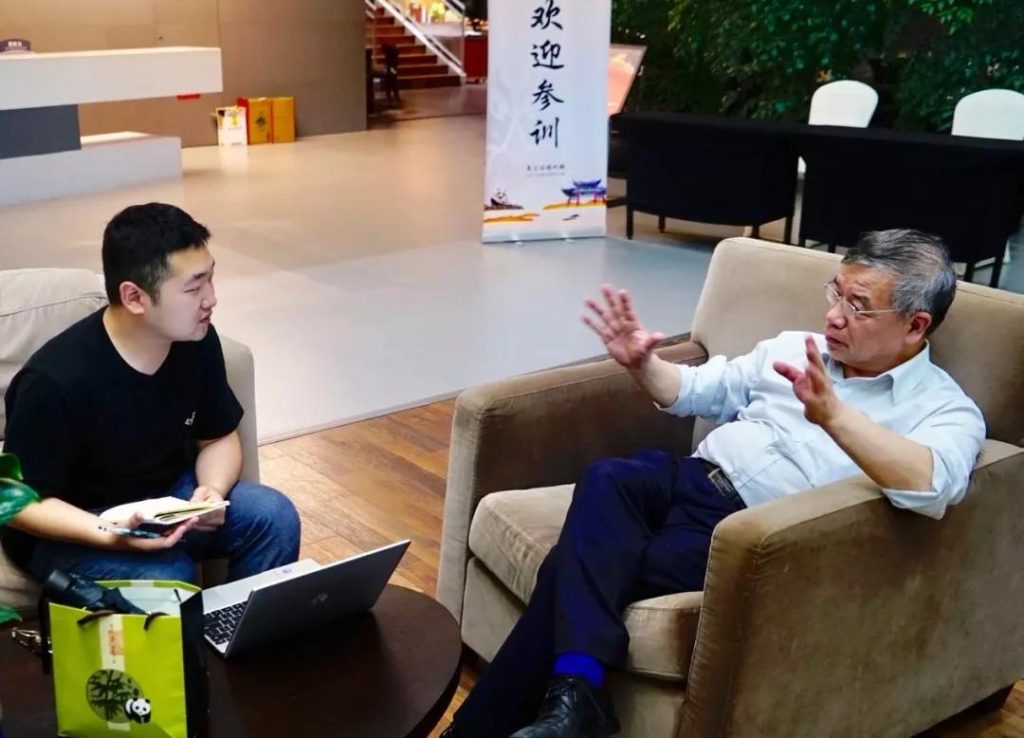
Q: What is the research experience of Fudan University’s Belt and Road Institute and Global Governance Institute?
A:First of all, we must realize that the joint construction of the “Belt and Road” is a historic project for the next few decades. The “Belt and Road” is a historic project for China in the next decade. We cannot wait until decades later to study it, because it will be too late and problems will pile up.
Secondly, we must realize that it is a series of problems that are constantly deepening, and we must track these problems and continue to study them over the long term. Now that the Belt and Road Initiative has just begun, we must closely integrate the specific problems that arise when jointly building the Belt and Road Initiative and summarize the achievements and experiences in solving these problems. As the joint construction of the Belt and Road Initiative develops in depth, these experiences will also expand in breadth and depth.
Q: What are some suggestions for communication research in the Pan-Himalayan region?
A:We focus on the study of the Pan-Himalayan ecosystem. First of all, the Pan-Himalayan region is a huge ecosystem. The ecosystem is an important area of our research. The Himalayas have ancient and rich original ecological resources and world-class landscapes that are worth studying.
Focus on the research of the Pan-Himalayan cultural circle. Secondly, it is a huge cultural circle. Buddhism, Islam, Christianity, and various cultures of the Central Plains converge here. However, natural barriers have blocked many cultures, making them integrate their own traditional characteristics in a unique small circle. Research based on the Pan-Himalayan cultural circle is also worth exploring.
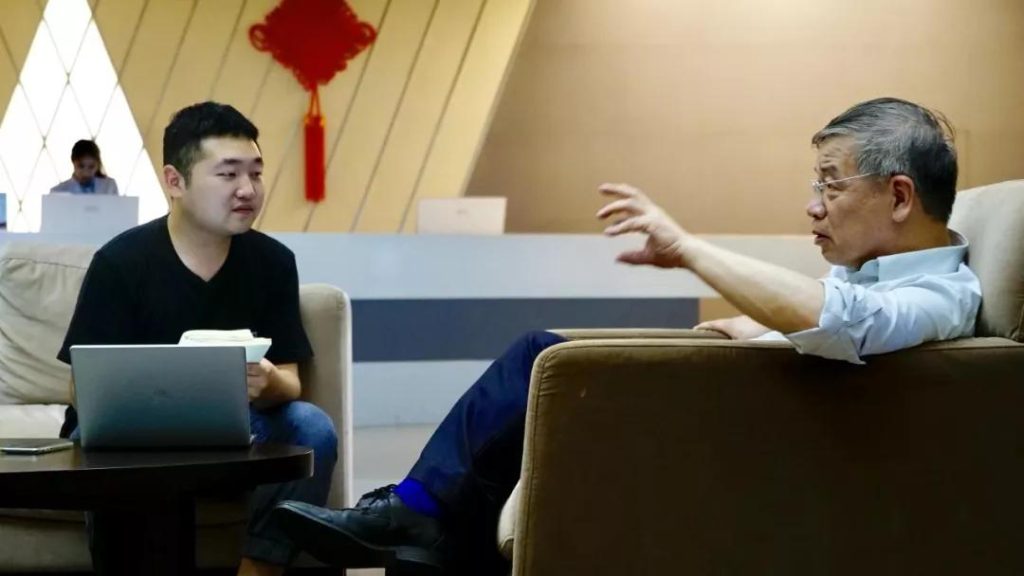
Q: Compared with coastal areas, what advantages can inland areas bring into play?
A: Seizing opportunities and utilizing resources are very important for the current development of inland areas.
The Belt and Road Initiative has changed the relative positions of various provinces in China. China-Europe trains, such as Chongqing-Xinjiang-Europe and Chengdu-Xinjiang-Europe, have given Sichuan and Chongqing more opportunities. To some extent, Sichuan and Chongqing are closer to Europe than Shanghai. Another example is the China-Myanmar Economic Corridor, which runs from Kunming to Ruili, through Dehong Prefecture, or through Baoshan to Tengchong, which has provided strong impetus for the Belt and Road Initiative. The old concept that the road to Shu is difficult and harder than climbing to the sky no longer exists today. Now the road to Shu is not difficult, and its transportation is very convenient, such as the Chengdu-Chongqing high-speed railway, which connects the Chengdu-Chongqing one-hour economic and transportation circle.
Make good use of mountain resources. Mountains are treasures. Mountains have minerals, scenery and culture. Mountains have much greater nurturing capacity than plains. Trees and water can nurture the ecology. Yunnan’s ethnic minorities develop in the undulating mountainous areas. Mountains isolate many things, but they also preserve many things. Many cultures in the mountains are in urgent need of exploration and research.