Reposted from : News-N-News,India
First publish date: November 8th , 2025
By Dr Challa Krishnaveer Abhishek
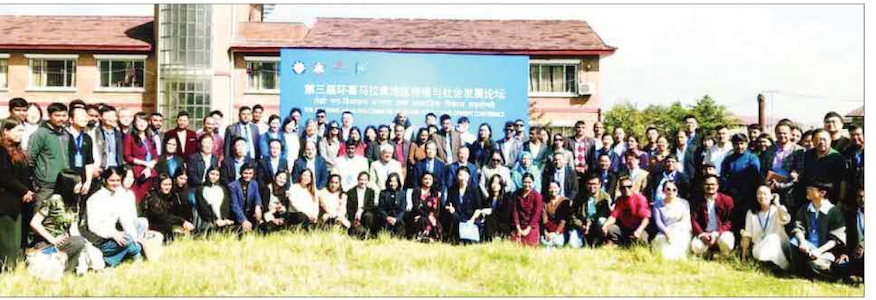
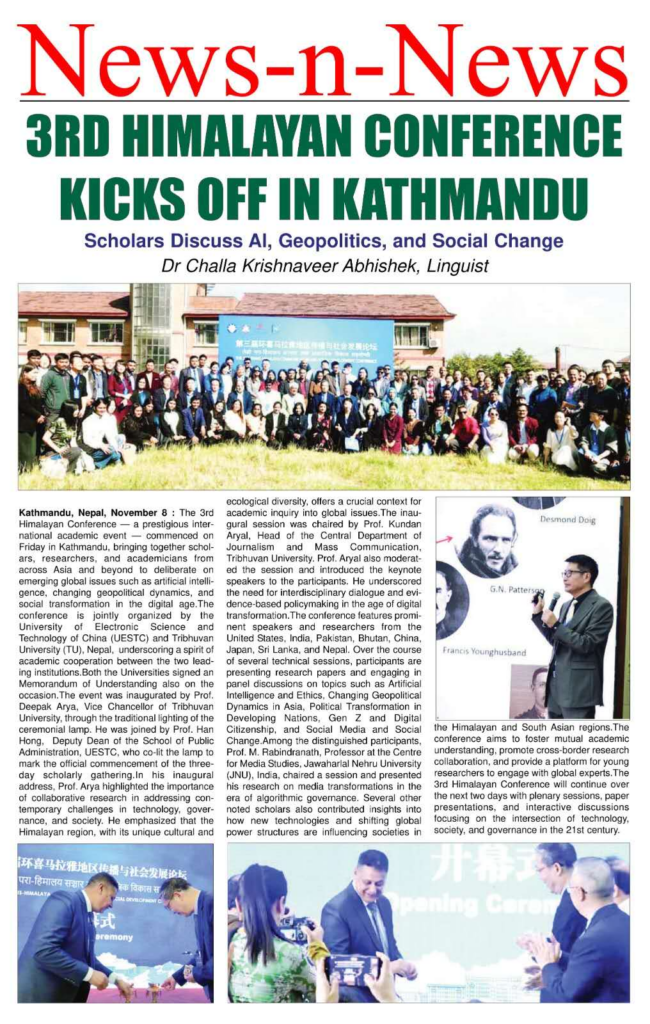
The 3rd Himalayan Conference—a prestigious international academic event — commenced on Friday in Kathmandu, bringing together scholars, researchers, and academicians from across Asia and beyond to deliberate on emerging global issues such as artificial intelligence, changing geopolitical dynamics, and social transformation in the digital age.The conference University is jointly organized by the of Electronic Science and Technology of China (UESTC) and Tribhuvan University (TU), Nepal, underscoring a spirit of academic cooperation between the two leading institutions.Both the Universities signed an Memorandum of Understanding also on the occasion.
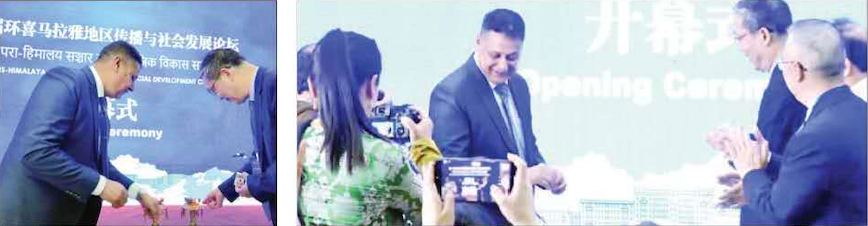
The event was inaugurated by Prof.Deepak Arya,Vice Chancellor of Tribhuvan University, through the traditional lighting of the ceremonial lamp. He was joined by Prof. Han Hong, Deputy Dean of the School of Public Administration, UESTC, who co-lit the lamp to mark the official commencement of the three-day scholarly gathering.In his inaugural address, Prof. Arya highlighted the importance of collaborative research in addressing contemporary challenges in technology, gover-nance, and society. He emphasized that the Himalayan region, with its unique cultural and ecological diversity, offers a crucial context for academic inquiry into global issues.The inaugural session was chaired by Prof. Kundan Aryal, Head of the Central Department of Journalism and Mass Communication, Tribhuvan University. Prof.Aryal also moderated the session and introduced the keynote speakers to the participants. He underscored the need for interdisciplinary dialogue and evidence-based policymaking in the age of digital transformation.
The conference features prominent speakers and researchers from the United States, India, Pakistan, Bhutan, China, Japan, Sri Lanka, and Nepal. Over the course of several technical sessions, participants are presenting research papers and engaging in panel discussions on topics such as Artificial Intelligence and Ethics, Changing Geopolitical Dynamics in Asia, Political Transformation in Developing Nations, Gen Z and Digital Citizenship, and Social Media and Social Change.Among the distinguished participants, Prof. M. Rabindranath, Professor at the Centre for Media Studies, Jawaharlal Nehru University (JNU), India, chaired a session and presented his research on media transformations in the era of algorithmic governance. Several other noted scholars also contributed insights into how new technologies and shifting global power structures are influencing societies in the Himalayan and South Asian regions.
The conference aims to foster mutual academic understanding, promote cross-border research collaboration, and provide a platform for young researchers to engage with global experts. The 3rd Himalayan Conference will continue over the next two days with plenary sessions, paper presentations, and interactive discussions focusing on the intersection of technology, society, and governance in the 21st century.
Original from: