Reposted from Media India Group
Initially published: April 1, 2025
Author: Rajendra Shende
Link:https://mediaindia.eu/politics/himalayas-not-barriers-mountains-of-opportunities-in-india-china-ties/
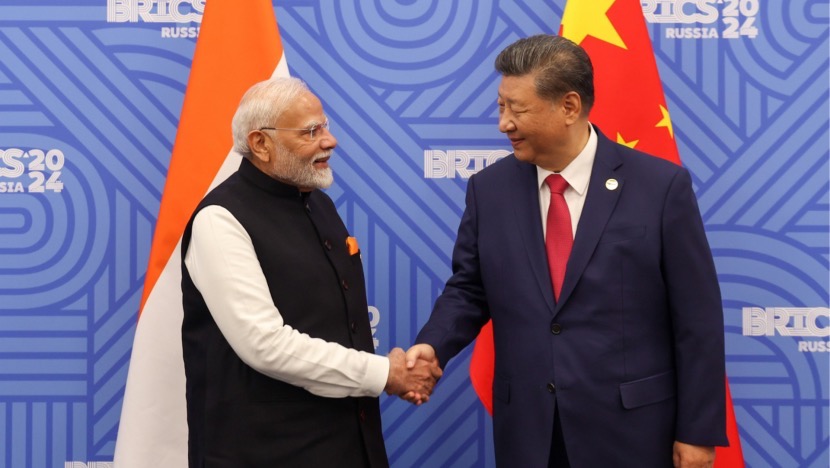
On April 1, as India and China celebrate their 75th anniversary of establishment of bilateral diplomatic relations.
The Himalayan mountains that stand between India and China are often conceived as barriers and impediment to their mutual relations and even raison d’etre for the bilateral conflicts over last nearly 65 years. Contrary to that belief, the Himalayas have in fact been the facilitators in connecting two countries for last 3,500 years.
While many know the Silk Road as route that enabled the trade of commodities between the east and Middle-East, starting of course with silk, the same route has provided off-shoots and tentacles across Himalaya and leading to India for ‘trading the culture’. Such was the urge to seek the inner thoughts of philosophies of Buddhism and Maurya Empire that Chinese explorers like Hiuen Tsang, known in China as Xuanzang, even considered the Himalayas as necessary challenge that needed to be traversed to understand the inner voices of nirvana of Buddhism.
Even in more recent past than the Mauryan era, the existence of Himalayas did not stop many Indians from reaching to the Chinese people fight invading Imerpial Japanese armies. Dr Kotnis, a doctor from a small town in Maharashtra, is an inspiring example who was later honoured by Chairman Mao by installing statue in his memory.
On April 1, as India and China celebrate their 75th anniversary of establishment of bilateral diplomatic relations, it is time to recognise not only the mighty 3,500 km long Himalayan majesty that connects two countries, but also the 3,500 years of thought-based history that has kindled amazing opportunities for our planet’s sustainable future.
Like the valleys of mighty rivers emanating from Himalayas, there have been ups and downs in the relations between two nations in recent history. The bonds between two countries were sometimes frozen like glaciers and other times their hostility dangerously overflew like rapidly melting glacier lakes.
Particularly, in the past few years, the relations have been hit hard with the situation on tense borders has even resulted in violent skirmishes that led to casualties on both sides. How India and China dealt with such crisis is now part of the enduring lessons in bilateral mediations. Those engaged in shuttle and ping-pong diplomacy can now research on 20th and 21st century encyclopedia of diplomacy.
It is often overlooked by the western diplomats that no other two countries share such colossal and sky-high massive mountain range as a natural boundary. In context of on-going crazy and deadly wars that may turn into genocides, India and China have emerged as the maestros of bilateral preventive diplomacy and avoided uncontrolled fatal conflicts.
The 1962 India-China war, that came after almost 15 years of bonhomie of Hindi Chini Bhai Bhai or Indo-Chinese camaraderie and the Panchasheel Agreement of peaceful coexistence, caused a lot of rancour, especially in India, but after a few years, the two sides did get down to the negotiating table to find a peaceful solution to their border disputes, displaying the intensity of purpose and force of intentions of the two countries.
The Working Mechanism for Consultation & Coordination on India-China Border Affairs (WMCC) with which both countries handle the serious cross-border issues including pilgrimage by citizens of both the countries to clearly show that the connections between India and China are rooted in sound realisation that neither can discount, much less provoke, the other.
And most recently, after a five-year stand off when the relations had become as frozen as the Ice Age, they have begun to thaw again and the two countries are now again actively engaged in discussions and negotiations to resume bilateral cooperation, cultural exchanges and mutually boost tourism as well.
The broad cooperation between India and China, despite its ups and downs, sends the message of need for peace, stability and progress not just in Asia but also around the world. The leaders of two countries Prime Minister Narendra Modi and President Xi Jinping have met 18 times over last 10 years to reassure to the world that there is responsible savoir-faire with conscientious accountability.
These meetings were definitely not part of stylish ‘shuttle diplomacy’ but number of them were part of broader meetings like BRICS Summit, attended by leaders of Brazil, Russia, India, China and South Africa, and the Summit of Shanghai Cooperation Organisation (SCO, giving clear indication that though both of them are giants in both groupings, they are part of multilateral movements.
There is no dearth of hardbound and even coffee table books on India-China ties, which are replete with perceived conflicts and comparisons between India and China related to trade-interests, investment-luring, GDP-comparisons, technology-might, demographic-dividends and of course short-lived political checkmates!
What is grossly missed is the opportunity that both countries have in the thick of the triple crisis as termed by UN Secretary General. It can be called as ‘ABC’ crisis. Air Pollution, Biodiversity loss and Climate Change. The people of the world’s two most populous countries are amongst those facing the worst impact of the common planetary challenges. Thus, the two nations urgently need to forge the selective-alliance for common interest, recognising the unique geo-positions and sincere self-imposed targets by both countries towards Sustainable Development Goals (SDGs) and Net Zero Targets.
The diplomacy of restraint as employed by India and China in recent years can be of an enormous asset to accomplish the seemingly impossible targets of addressing the what is now known as planet-wide existential threat of climate change. Both India and China, more as complimentary partners than individual adventurers, can manage their growth and people’s wellbeing in more inclusive and sustainable manner to prevent planetary crisis.
After all, together the two countries represent 27 pc of the world’s GDP in terms of Purchasing power Parity (PPP) whereas Europe and the United States together represent nearly same or 30 pc of GDP in PPP terms. The difference, however, is the committed strategy to implement the climate goals that both countries have promised under Paris Climate Agreement, typically called as NDCs or Nationally Determined Contributions. India and China have both exceeded their NDCs targets before time. Together they represent nearly 70 pc of world’s renewable energy. Both countries are on fast track to reduce their carbon intensity and forest cover. Both President Xi Jinping and Prime Minister Narendra Modi are champions of sustainable development and promoters of coexistence with nature and ecosystems.
The meeting of two leaders at Kazan in Russia in October 2024 was a turning moments that herald the new era of post-75 years of India-China diplomatic relations. Dialogue over discord has been the mantra, not allowing differences to become disputes seems to be new tune, attempting the consensus with cooperation is the new theme and healthy, natural competition rather than confrontation would be the new premise.
Both countries have not only put the wellbeing of their 2.8 billion people in focus but the shared aspirations of regional countries, and historical trend of the rising Global South are identified as fulcrum of global peace, stability, and prosperity. Interestingly, Chinese spokesperson commenting on Modi’s recent podcast said that a cooperative pas de deux of the dragon and the elephant is the only right choice for China and India’. Spokesperson added that the 75th anniversary of the establishment of diplomatic ties is an opportunity to advance exchanges and cooperation across various fields and levels, and promote the healthy and stable development of China-India relations.
No one is expecting a sudden transformation to the dreamy, peaceful and less warm planet right from today as the two countries celebrate the diamond jubilee of their diplomatic relations. But there is optimism in the air. That could be catalyst to build alliance between China and India to address the impending, overlooked but grave environmental crisis such as biodiversity loss, health impact of air pollution, carbon emissions due to rapid acceleration of digital technologies, including AI, recycling of e-waste including solar panels and EV-batteries and impending planetary scale water crisis getting worst due to climate change.
Their global footprints, despite the short-lived whimsical aberrations of some powerful nations would lead the global community to be more respectful for the ecosystem and nature.
Nobel Laurate and great Indian poet Rabindranath Tagore, said a over a century back, “Friends, I don’t know why, but when I come to China, it feels like returning to my hometown. I have always felt that India is an extremely close relative of China and are very old and dear brothers”. It is time to relive those relations.
Rajendra Shende is a former Director UNEP, Founder Director Green TERRE Foundation, coordinating lead author, IPCC that won Nobel peace prize, Prime Mover SCCN, IIT Alumnus.