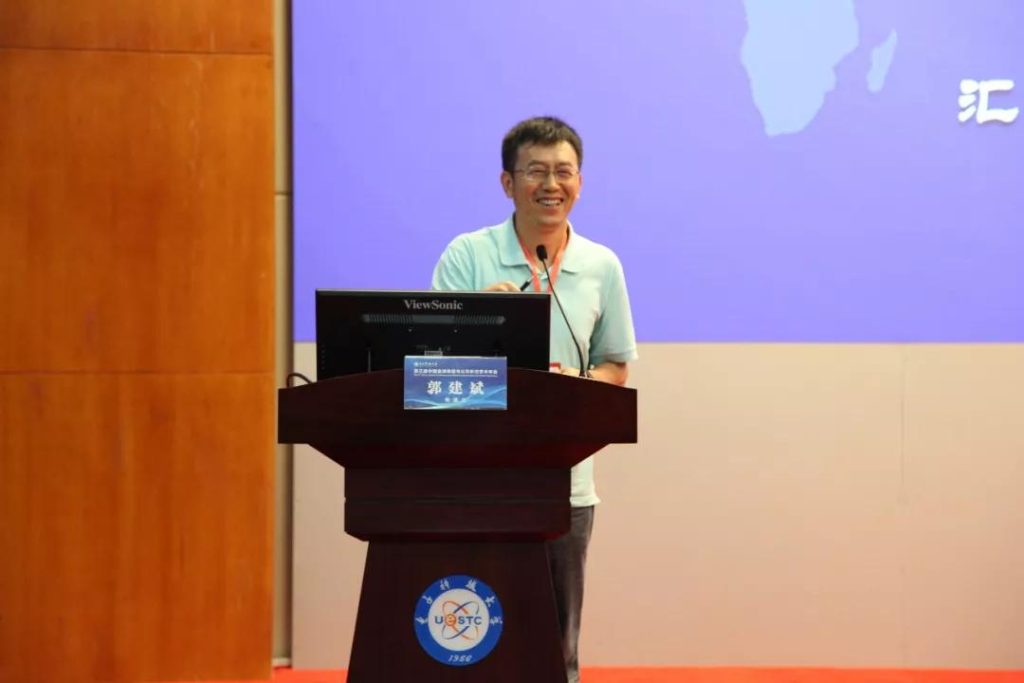
Guest Introduction:Guo Jianbin, PhD, is a professor and doctoral supervisor at Yunnan University and the director of the Institute of Media Anthropology. He is a resident researcher at the Information and Communication Research Center of Fudan University. From August to December 2007, he was a visiting scholar at the Department of Art Communication of the University of Wisconsin (Madison); from July 2009 to January 2010, he was a visiting scholar at the Chinese University of Hong Kong. His main research areas: ethnic cultural communication and media anthropology. ——Introduction excerpted from the official website of the School of Ethnology and Sociology of Yunnan University
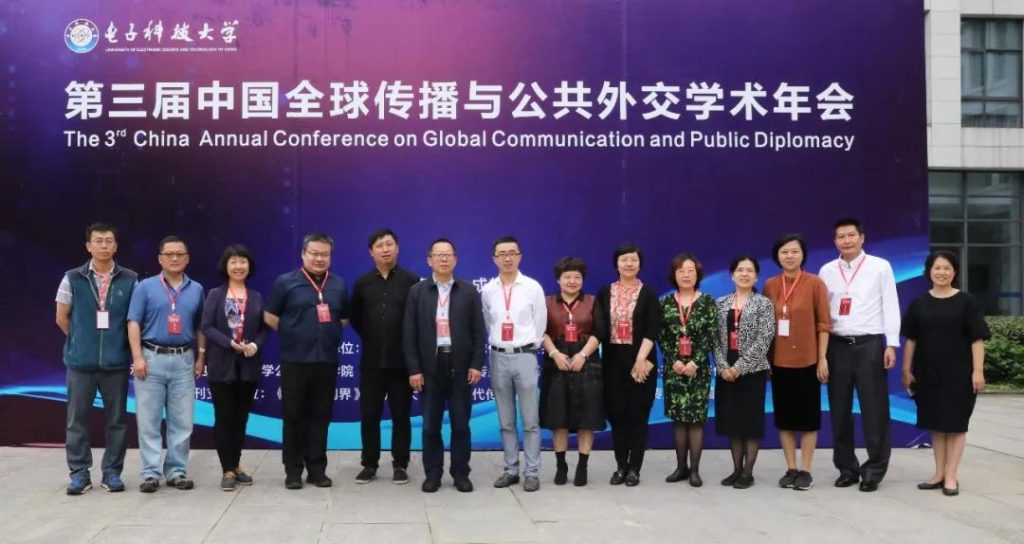
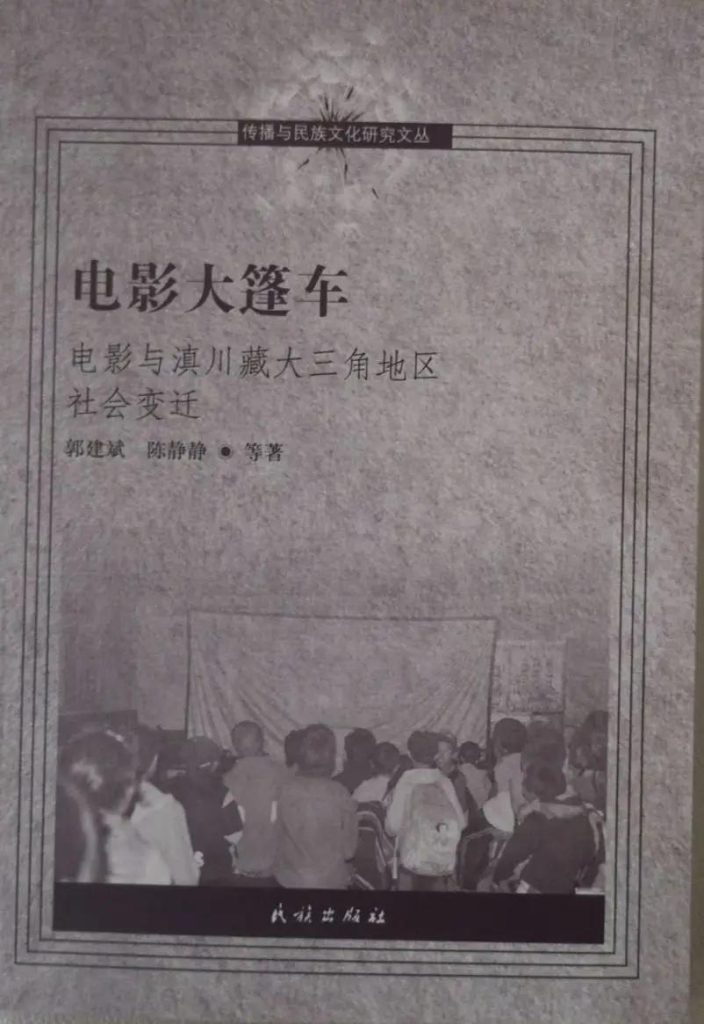
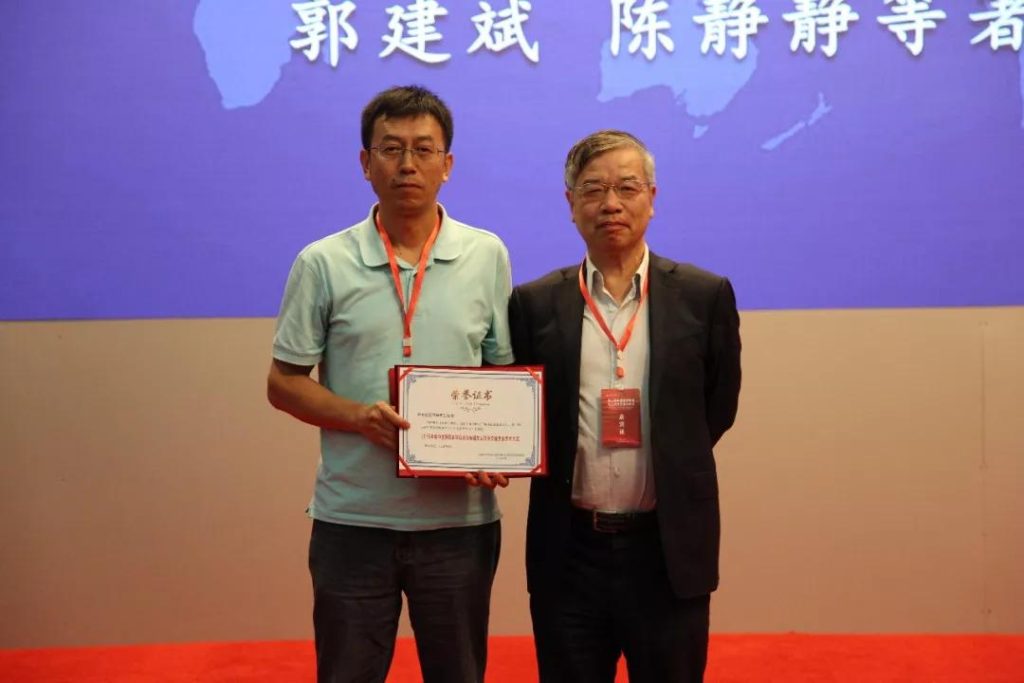
Recently, the 3rd Annual Conference on Global Communication and Public Diplomacy in China was successfully concluded at the Qingshuihe Campus of the University of Electronic Science and Technology of China. The book “Film Caravan: Film and Social Change in the Yunnan-Sichuan-Tibet Triangle Region” written by Professor Guo Jianbin and Chen Jingjing from the School of Ethnology and Sociology of Yunnan University won the Best Academic Award of the Global Communication and Public Diplomacy Committee of the Chinese Journalism History Society. After five years of field research, a collection of papers was finally written. What is the story behind this? What should we think about field research? Today, the Pan-Himalayan Regional Communication Research Center brings you an exclusive interview with Professor Guo Jianbin. Don’t miss it!
Continuation of research: Starting again from the field
Q: Professor Guo, can you share with us how you completed this award-winning research?
A: From a personal perspective, this research is a continuation of my previous research ideas. When I was in Duxiang, it was just a small village, but now the country’s top leaders are also paying attention to the development of the Dulong people and Dulong River. This place has a small population of only 4,000 people and a land area of only 1,994 square kilometers. At that time, this research was just a community study in the traditional anthropological sense, which is equivalent to living in a relatively small community for a period of time and having a more complete understanding of all aspects of the community. This is also the usual research path of anthropology, and it covers a relatively small area.
I had not received professional anthropology training before doing research, but a teacher of mine told me that it is actually very simple to do such field research. In layman’s terms, it is like “catching everything in one fell swoop when the devils enter the village.” You need to collect information from all aspects. From the professional terminology of anthropology, it reflects a holistic perspective. You need to observe from all aspects: production, life, religious beliefs, etc. It is not like the general special research we do, which only focuses on the media and not the grassroots.
After doing this research, I wanted to change my thinking, methods and research area. It has been more than 20 years since I first entered Duxiang in 1994, and I am very familiar with it, so I wanted to find a new place. So starting in 2010, by chance, I happened to apply for a related project, so I moved the field survey locations to Yunnan, Sichuan and Tibet, specifically Diqing in Yunnan, Ganzi in Sichuan and Qamdo in Tibet. Therefore, this research has changed in terms of area.
The second is the change in research methods. A few years ago, I wrote an article related to methods. When I started doing related research in 2010, I adopted a method that involved more ethnography. In the past, traditional ethnography only focused on one community, which can also be called single-point ethnography. But now I want to expand the area and try a multi-point ethnography method. The three states I studied have more than 30 counties, which is a wide area. Usually we can’t go to a few counties in a month, so I want to try new methods.
In terms of specific media forms, I originally focused on television. My doctoral thesis in 2003 was about television. After the rise of new media, many people began to pay attention to this media, but I wanted to focus on “old media”. For example, movies are actually an ancient media, so I began to turn to the study of movies.
During this research, I started going to Qamdo in 2010. The first time I went there, I took a bus from Chengdu. I spent 80 hours on the bus for a journey of more than 1,000 kilometers. At first, I wanted to focus on traditional media, such as film movies, but when I went there in 2010, I found that film movies were being converted to digital movies. When I went there again in 2012, all rural cinemas had been converted to digital movie projectors, turning into new media, which is also a very interesting thing.
Grasping the pain points of research: open mind and standardized methods
Q: There are so many areas for research in the southwestern ethnic regions. What aspects do you think should be focused on?
A: I often say that people in the southwest are too honest and simple-minded in a sense. We have endless resources, but the resources have been taken away, so we can’t make anything decent. As for this related research, we sometimes become data porters. Many so-called raw materials face similar problems. The same is true for academic research. The southwest region has so many resources, but many good research is not done by local people. Even well-known foreign scholars who come here for a period of time can make a world-class impact.
So we need to adjust our mentality . First of all, we need to learn with an open mind. What is more important is to learn a standardized research path . If you don’t follow the standard, you will not be able to communicate with others. A teacher from a certain university held a forum in Kunming. I said that the quality of this paper was too poor, which made me feel like a third world.
So why are we doing so badly in the research related to information dissemination and social development in ethnic minority areas? If the papers we produce do not have the minimum academic standards, how can others respect us? So if locals are doing research in their local area, I think the most important thing is the standardization of methods. Then learn others’ standard methods with an open mind, master the forefront of the research field, and try to think together with standardized academic discourse. Only in this way can we transform precious resources into outstanding academic achievements and have equal exchanges on a higher academic platform.
If you are not standardized, others will naturally look down on you. This is a very simple truth. It is also the same in other aspects besides academic research. Otherwise, you will become a place for exporting resources. I think this is the biggest problem at present.
Conflict of ideas: returning research to the field
Q: Do you think health communication research in Tibetan areas deserves attention? Is there anything worth exploring and paying attention to?
A: When we do health communication, we should not use Western medical concepts to conduct research. If we do research using field methods, we should fully explore local knowledge about medicine. Second, I have foreign friends who do health communication. They have always wanted to come to ethnic minority areas to do related research. This is a question of common interest to us.
For example, there is a lot of traditional medical knowledge there, but now due to the establishment of the modern medical system and the flow of information, Western medical concepts are also spreading to the local area. In this process, there will inevitably be conflicts of concepts, that is, the conflict between local traditional medical concepts and foreign medical concepts. This is also another point of concern. On the one hand, there is local knowledge, and on the other hand, there is the conflict between foreign knowledge and local knowledge. I believe that if we focus on these two points in our research, we will definitely be able to produce great things.
I have heard from my friends at the Chinese Academy of Sciences that they have opened up the field of ethnobotany, and want to combine ethnology and botany. Ethnic minority areas have a very complete concept of local ecology. In many traditional concepts, this is the unity of man and nature, which is completely harmonious. Man and nature are integrated, and nature is full of spirituality, so the primitive religious system and the environment are completely integrated. This is very important traditional local knowledge, and we must fully explore it. Don’t simply measure it with urban standards.
In health communication, there will be conflicts of ideas. For example, an orthopedic surgeon receives Western training. So he will never accept methods like herbal medicine. We cannot say that traditional local knowledge is necessarily correct. On the one hand, you need to explore and understand their cognitive deficiencies, and then understand how foreign knowledge conflicts with traditional knowledge. But I think conflicts are good for research, so that you can find an ideal entry point.
Q: What do you think about online ethnography, which is to move the field to the Internet
to observe people’s behavior in the media?
A: Anthropology is also doing network ethnography or Internet anthropology. I have already talked about this issue in an article two years ago. We may still have many problems in discussing the specific methods of the so-called network ethnography. It is not a strict network ethnography. Kuznets’s work once mentioned that we should fully explore the particularity of the network community and then raise valuable questions and answer them. Now the relevant research practice has just begun. When we talk about network ethnography, we often mention the combination of online and offline. From the perspective of specific practice, this is correct, but from the perspective of method, this is definitely not a strict network ethnography.